Your Trade Show Is a Major Investment. Here's What Can Go Wrong.
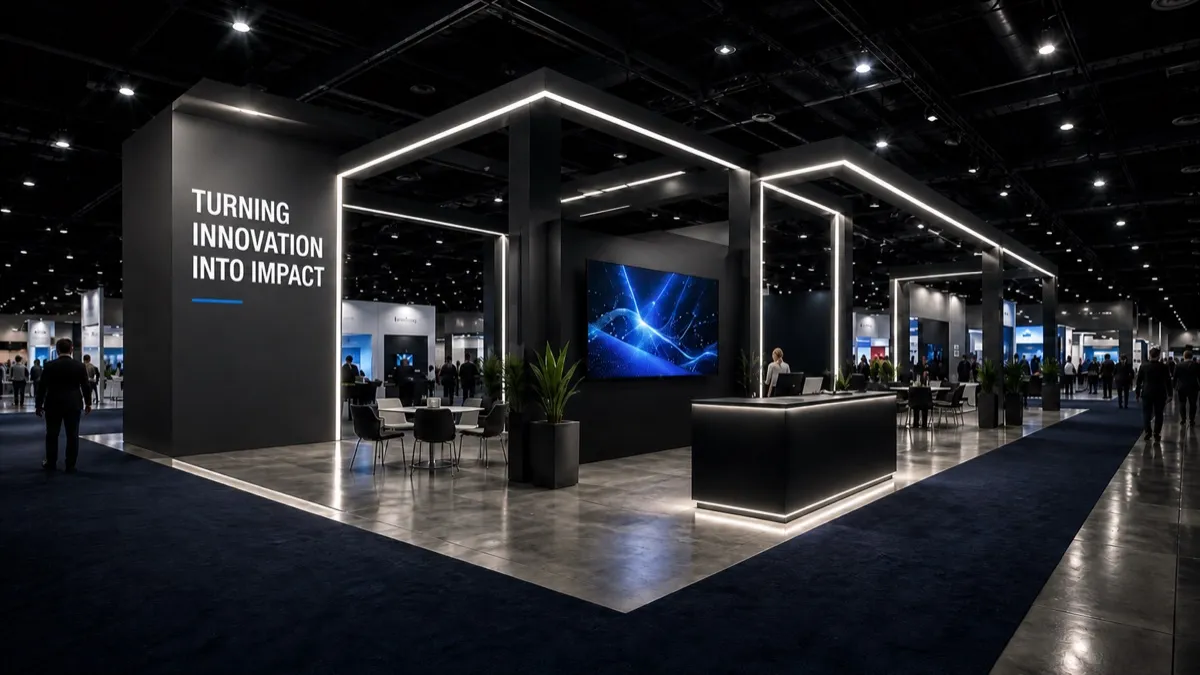
A trade show can be one of the largest marketing investments a company makes all year.
The exhibit itself can cost tens or even hundreds of thousands of dollars. Add freight, drayage, labor, electrical, AV, travel, hotels, hospitality, staffing, marketing, and the opportunity cost of taking your team away from their day-to-day work, and suddenly those few days on a convention floor represent a very serious investment.
And yet I have seen companies spend months preparing for a show without one person truly owning the entire program.
After more than a decade managing domestic and international trade shows, I have learned something very simple:
Successful trade shows are rarely the result of one brilliant decision. They are the result of hundreds of good decisions made in the right order.
And it starts with the exhibit itself.
Your booth has one job before anything else happens
It needs to make someone stop.
Before your sales team gets a chance to speak, before a product demonstration happens, before a badge is scanned, your exhibit is already communicating.
From twenty or thirty feet away, can someone understand who you are?
Is the messaging clear?
Does the space feel inviting?
Can visitors immediately see what you want them to see?
Can they enter naturally, or has the layout accidentally created a barrier?
A beautiful exhibit can still be a terrible trade show booth.
I have seen designs that looked fantastic in renderings but did not work once you considered traffic flow, product placement, sight lines, demonstrations, storage, meeting areas, and the number of people who actually needed to occupy the space.
Designing an exhibit is not simply about making something attractive.
The design has to work.
Design around the objective, not the furniture
Before anyone starts discussing counters, LED walls, conference rooms, or hanging signs, there is a more important question:
What does this company need to accomplish at the show?
Maybe the goal is lead generation.
Maybe you are launching a product.
Maybe distributors need demonstrations.
Maybe existing customers need private meeting space.
Maybe the objective is brand awareness in a market where nobody knows you yet.
Those objectives should determine the layout.
If product demonstrations are the priority, visitors need to see them and move around them comfortably. If executive meetings matter, you need somewhere to have a conversation without shouting over thousands of people. If lead generation is the goal, the booth needs to encourage people to enter instead of creating an invisible wall between the aisle and your team.
Every square foot should have a reason for being there.
Messaging has seconds to work
Trade show messaging is not website copy printed six feet wide.
People are walking. They are talking. They are looking at competitors. Their phones are buzzing.
You have seconds to answer three questions:
Who are you?
What do you do?
Why should I stop?
If visitors need to stand in the aisle and read three paragraphs to understand your company, you have already lost them.
The best messaging creates curiosity quickly and gives your team an opening to start the conversation.
Then come the hundreds of details nobody sees
The booth gets the attention because it is visible.
The operational work behind it is largely invisible, until something goes wrong.
Freight has to arrive.
Electrical and internet have to be ordered.
Rigging has deadlines.
Labor has schedules.
Graphics need approval.
Products need to arrive intact and be positioned correctly.
AV needs testing.
Badges need ordering.
Hotels need booking.
Team travel needs coordinating.
Then there are customer dinners, executive schedules, apparel, lanyards, off-site events, restaurant reservations, installation, dismantle, exhibitor services, and dozens of deadlines that all have to happen at the right time.
Miss one deadline and the price can change dramatically.
Miss the wrong one and something important simply isn't there when the doors open.
Everyone can own a piece while nobody owns the show
This is one of the biggest problems I see.
Marketing owns the messaging.
Engineering owns the equipment.
Sales owns the customer meetings.
The exhibit house owns the booth.
Operations handles shipping.
Someone books the hotel.
Someone else organizes dinner.
Everyone is doing their job.
But who is looking across all of it?
Trade shows are cross-functional projects. Decisions made by one team affect another constantly.
Changing the location of a machine affects electrical requirements. Changing a wall affects graphics. Changing the demonstration schedule affects staffing. Changing the shipment date affects installation.
Without one person looking across the entire program, those dependencies are often discovered late, when fixing them becomes expensive.
Your exhibit house is an important partner, but it cannot own everything
A good exhibit house is invaluable. They design, engineer, build, install, and service the physical exhibit.
But they are not your marketing department, engineering team, sales organization, travel coordinator, hospitality planner, or executive leadership.
Someone on your side still needs to connect those worlds.
That person should understand the company's objectives, challenge decisions when necessary, coordinate internal teams, work alongside the exhibit house and vendors, watch the budget, manage the timeline, and make sure nothing quietly falls between departments.
Opening morning is too late to discover a problem
The best trade show management is almost invisible.
The booth is ready.
The products work.
The team knows where to be.
Customer meetings are scheduled.
The graphics are correct.
Dinner is booked.
The executives arrive when they are supposed to.
Nobody is frantically calling a vendor thirty minutes before the doors open.
It looks easy because somebody spent months making sure it would.
Protect the investment
Companies often focus on reducing the cost of managing a trade show while spending enormous amounts of money on the trade show itself.
The better question is:
Who is protecting that investment?
NovaCore's Trade Show Executive Management provides one accountable leader overseeing the program from initial strategy and exhibit planning through logistics, installation, and opening day.
Working as an extension of your team, we coordinate marketing, sales, engineering, vendors, logistics, hospitality, and your exhibit house so you don't have to manage the gaps between them.
Because after more than a decade doing this, one thing is very clear to me.
A successful trade show doesn't begin when the doors open.
By then, most of the important decisions have already been made.
ABOUT THE AUTHOR
Amir Reichental
Amir Reichental is the founder of NovaCore Strategies, a consultancy helping businesses turn complex projects into clear, well-executed results.
With more than a decade of experience spanning digital strategy, website development, search visibility, trade shows, and cross-functional project leadership, Amir works directly with clients from strategy through execution. He serves as an extension of their team, bringing together marketing, operations, creative, technical teams, and outside partners to keep projects moving and make sure the details are handled.
His work includes website strategy and development, SEO and AI search visibility, trade show leadership, and special projects for professional services firms, healthcare and wellness businesses, technology companies, and growing organizations that need experienced hands-on leadership without adding full-time internal headcount.
More about AmirSTART HERE
Have a show coming up?
Book a free 15-minute call. No pitch, no pressure. Just a straight conversation about the program and where the gaps are.
Book a free 15-minute call